
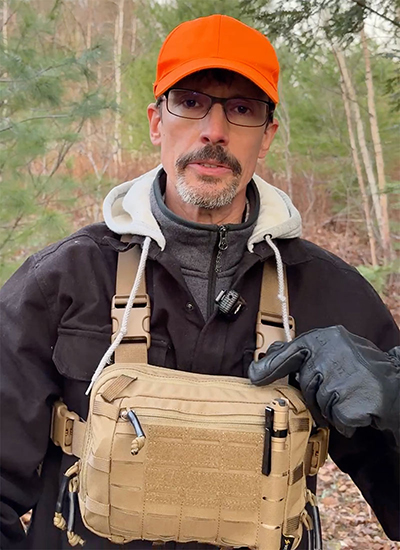
Many people ask what I’m carrying in the chest pack they see me wearing in my videos. The honest answer is: it depends. My loadout changes with the situation. But when I’m headed into the wilderness, that pack is built around survival—plain and simple.
What follows is a detailed breakdown of the exact gear I carried while hunting deer in the deep north woods of Maine in November. In that environment, the priorities are clear: being able to navigate confidently, get myself out under my own power, and—if everything goes sideways—survive multiple nights alone in the forest with no outside help.
Redundancy in gear is key. Two is one and one is none.
The Chest Pack Itself
I use a few different chest packs depending on what I’m doing—hunting, fishing, exploring, or filming videos. That said, my go-to pack is the Votagoo Tactical Chest Pack. It’s comfortable to wear for long periods, has the right mix of pockets and attachment points, and comes in multiple colors, which matters more than people think when you’re trying to blend into different environments.
I most often use the Votagoo chest pack:

- AMBIDEXTROUS CCW COMPARTMENT DESIGN: Features a universal inside holster for most handguns...
- AMPLE STORAGE SPACE: Includes a front zipper pocket, main zipper pocket, and hidden pistol...
- PRACTICAL STRAP SYSTEM: Adjustable shoulder straps with four quick-release buckles for easy...
When I’m not running the Votagoo, I usually wear the more budget-friendly CV Life chest pack:

- Custom Fit Zero Bounce: Our running vests feature an adjustable fit for chest circumferences...
- Quick Access and Molle Chest Pack for Hunting: The tactical chest bag includes a gear holster...
- Sturdy and Breathable: Our running vest utilizes high-density membrane fabric that resists...
It also comes in several colors and gets the job done, but the materials and overall fit aren’t on the same level. It’s a solid option if cost is a concern, just not as refined or durable as the Votagoo.
Basic Emergency Gear
I never go into the deep woods without these basic pieces of survival gear. If I were to get lost or injured and had to spend a day or two on my own, this gear would allow me to stay warm, stay hydrated, and signal for help.
P4X Emergency Poncho
This is essentially an upgraded version of the Mylar “space blanket” most people are familiar with. It’s far more useful in the real world. The poncho design wraps around your body better, the material is stronger, and it can be used to collect or carry water. It also doubles as a signaling device when visibility matters.

- A Wearable Poncho, Not a Flat Blanket – This is a hooded survival rain poncho you put on, not...
- Compact Yet Spacious Fit – Designed to fit over most backpacks, this mylar poncho allows you...
- Advanced Heat Retention – Reflective mylar lining traps 90% of body heat, making this poncho...
Emergency Whistle
If you get lost and people are searching for you, your voice won’t last long. Yelling for help will destroy it quickly. An emergency whistle is lightweight, compact, inexpensive, and vastly more effective than shouting. It’s an obvious piece of kit for a chest pack.
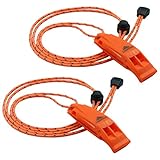
- SUPER LOUD survival whistle: double tubes emergency whistle, high pitched powerful noise maker...
- PEALESS DESIGN means no moving parts, nothing to obstruct sound, and nothing to jam, break or...
- ADJUSTABLE REFLECTIVE LANYARD and CLIP, high visibility even in the dark with slider button to...
Ferro Rod and Fire Starter
Fire is life when you’re cold, wet, and alone—and it’s also one of your best signaling tools. I always carry a standard Bic lighter, but lighters can fail in cold or wet conditions. That’s why I also carry a robust ferro rod with a striker and a reliable fire starter. My go-to setup for both is the Black Beard Fire Starter kit. I break the kit down and cram the components into my chest pack to save space.

- INCLUDES – 3 Black Beard Fire Starter Rope, 1 Ferro Rod, 1 Fire Kit Organizer, 1 Black Beard...
- EASY TO START – Cut the desired amount off the fire starter rope, use the ferro rod to spark...
- BLACK BEARD FIRE STARTER ROPE – Waterproof, windproof and failproof, each rope can withstand...
Simple First Aid Supplies
There isn’t room for a full first aid kit, but I always carry the essentials. That includes bandages and Zip Stitch wound closures for cuts that are too deep for bandages alone. These work like improvised stitches and are extremely effective when you’re far from help.

- LIFE'S UNEXPECTED MOMENTS — Equip yourself with Survivex First aid Kit - Zipstitch Closures...
- USER-FRIENDLY APPLICATION — Featuring an innovative zip stitch design, our zip sutures aligns...
- IDEAL FOR SENSITIVE USERS — Designed with children and the elderly in mind, our...
Stormproof Matches
Lighters are unreliable in cold, wet conditions. Ferro rods can sometimes be challenging. Stormproof matches can be used in windy or wet environments. You can even stick it in a river, pull it out, and it will still burn.
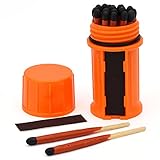
- ✅FUNCTIONAL AND WATERPROOF MATCHES - Dropped in water by accident, no problem. Our water...
- ✅GREAT FOR SURVIVAL AND EMERGENCY KITS - Most kits do not have waterproof matches. Be...
- ✅DURABLE AND RELIABLE CAMPING MATCHES - Do not rely on ordinary kitchen matches that cannot...
Survival Water Straw
Water is non-negotiable. You’ll often hear that you can’t survive more than three days without it, but the reality is you’ll be largely incapacitated long before that from dehydration alone. That’s why I keep an emergency water straw in my chest pack. It gives me the ability to safely drink from streams, ponds, or even questionable puddles if that’s what I have to work with in the woods.

- CLEAN WATER ANYWHERE: Our water filter straws solve the real challenge of being on the move...
- LIGHTWEIGHT & PORTABLE: Our filters weigh only 2 oz and measure 8 inches long, so you can take...
- HIGH LEVEL FILTRATION: Each of the 5 filters removes over 99.99% of waterborne bacteria (such...
Navigation Supplies
It’s easy to get turned around in the deep woods, especially when you’re moving slowly and changing direction while deer hunting. To prevent that from becoming a serious problem, I carry several pieces of gear specifically to help me stay oriented and find my way back out of the forest.
Garmin Handheld GPS
Some preppers might mock my handheld GPS because it looks like a reliance on technology. It isn’t. This device lets me move faster and more efficiently through the forest. I use it to log waypoints, mark where I parked my truck, and track natural landmarks, old logging roads, and other reference points that make navigating the woods safer and more deliberate.
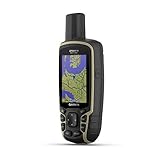
- Large 2.6” sunlight-readable color display for easy viewing
- Expanded global navigation satellite systems (GNSS) and multi-band technology allow you to get...
- Includes routable TopoActive mapping and federal public land map (U.S. only)

Map and Compass
I also carry 7.5-minute topographical maps of the area I’m traveling in, along with a compass to use with them. This is my failsafe navigation setup—the backup I rely on if the GPS fails, batteries die, or electronics stop being an option.
I use a basic Suunto compass that sits flat on a paper map. Most people don’t need anything more fancy than that.

- Recreational Compass: Minimalistic and straightforward, the A-10 compass is the ideal hiking...
- Baseplate Compass: Ideal for navigating with a map and compass, the A 10 is compact and...
- Stay On Course: Made in Finland, Suunto mechanical compasses help you safely and accurately...
You can usually find topographical maps for your area through the U.S. Geological Survey store. They’re inexpensive, accurate, and worth having long before you actually need them.
As another layer of navigation redundancy, I also download the onX app to my smartphone, which I carry separately from my chest pack. A lot of people don’t realize this, but your phone communicates directly with satellites. Even with zero cell service, it can still provide GPS positioning and help you navigate through the wilderness.
Flashlights
Being able to see in the dark is critical. I may need to watch my footing, work with my gear, or field dress a deer after last light. I might also need to use them for signaling. For that reason, I carry two flashlights in my chest pack and a headlamp in my jacket pocket. All of these lights are rechargeable, and two of them can also run on AA batteries for added redundancy.
ACEBEAM Tactical Flashlight
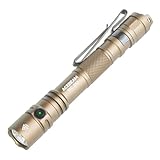
- EDC Tactical Dual Modes and Dual Switch Flashlight:TAC 2AA Flashlight with EDC and Tactical...
- Super Bright Powerful LED Flashlight:The TAC 2AA uses the latest CREE XP-LR LED, achieving a...
- Strong and Sturdy Flashlight:This EDC tactical flashlight rated IP68, 2m Submersible and...
Olight ArkPro Ultra

- The output of the green beam is ≤5mW, the class is 3R
- [4 Lights, 7 Configurations] The EDC Flashlight is an upgraded version of Arkfeld Ultra...
- [Exceedingly Pre-durable Material] Made from Olight's O-aluminum, which is 1.73x as hard as...
Petzl ACTIC Core Headlamp

- Mixed beam (wide and focused) allows for proximity and distance vision for movement. Three...
- Battery charge indicator shows the battery level each time lamp is turned on or off
- Plate allows you to easily tilt the lamp up or down. Headlamp can be tilted upward to see ahead...
Extra Power
I also want the ability to recharge electronics in the field, so I carry spare batteries along with a power bank and charging cable. This setup keeps my lights, GPS, and phone running when I’m far from the truck.

- Smaller Than Ever: Anker's new MiniCell technology delivers identical charging performance with...
- Pocket-Sized Power: At just 4.13 × 2.62 × 0.45" and 4.41 oz, it snaps to your phone and fits...
- Strong Attachment: Equipped with ultra-strong magnets that firmly attach to the back of the...
A Small Fixed Blade Knife
A knife is critical for wilderness survival—and for field dressing game. Space is limited in a chest pack, so you can’t carry anything oversized, but I strongly prefer a fixed blade in this role. Fixed blades are stronger, more reliable, and have fewer failure points than folders.
My go-to small, lightweight fixed blade is the White River Knife and Tool Small Game knife. It’s a higher-end knife made from S35VN steel and punches well above its weight for its size.

If that knife is outside your budget, a more affordable option—one I also own—is the Kizer Muskrat. It’s a surprisingly well-made knife for the price and is also available in S35VN steel.
No products found.
Summary
None of the gear in this chest pack is exotic or overcomplicated. It’s practical equipment for a specific environment and situation.
A wrong turn, a dead battery, an injury, or bad weather can turn a normal day into an overnight situation without warning. This gear helps me stay oriented, stay warm, make fire, treat injuries, purify water, and signal for help if I need it.
You don’t need to carry everything you own on your chest—but you do need to carry the right things. What’s in my pack reflects how I hunt and where I go. Many of the items listed above are almost always carried in the pack. I just swap some items out depending on where I’m going, what I’m doing, and what time of year it is.
I hope this was helpful!
1 comment
Your prepped press is very informative!