

People think you need to spend thousands of dollars to start prepping. You can easily spend tens of thousands – but you don’t have to. You don’t need a $300 survival knife, a closet full of freeze-dried food, body armor, or an elaborate bug-out bag. I mean, those are all nice, but start with the boring stuff: water, food, light, a way to cook off-grid, a way to keep your phone charged, and basic medical supplies.
Those are all things you’re much more likely to need when a winter storm knocks out power for three days, a water main breaks, or stores temporarily run short of something you need. You don’t need to spend a lot of money to get started; you just need to spend it wisely.
One important tip: look for products that can solve multiple problems (such as a power station with a built-in flashlight).
Before You Buy Anything: Start With the Right Priorities
If you’re new to preparedness, I’d prioritize your spending this way:
- Water
- Food
- Light
- First aid and medications
- Emergency cooking
- Backup power
- Warmth and shelter
- Communications
Notice what’s missing – tactical gear. It’s unnecessary when you’re just starting out. Build basic resilience first. Then expand.
If I Had $1,000 to Start Prepping
Your $1,000 goal: Become substantially better prepared for a short-term emergency. You’re not trying to prepare for the collapse of Western civilization. You’re trying to solve the most immediate problems that occur during more likely emergencies.
1. Water Storage
Water would be my first priority, no question. The standard advice is to store about one gallon of water per person per day. I recommend 1.5 gallons per day. Don’t think in terms of drinking water alone. Your household needs can be higher when cooking, sanitation, pets, heat, and other factors are considered. You should calculate your water needs and plan accordingly.
Instead of buying case after case of disposable bottled water, I’d get at least one reusable water container. The Aquabrick is probably my favorite small water container, but it does cost more than other containers.
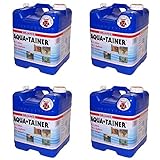
- Rigid, 7-gallon rectangular water container with molded contour grip
- Space-saving design for easy storing and stacking when empty
- New and improved screw-on vent; hideaway spigot for on-demand water dispensing
A seven-gallon container gives one person roughly a week’s worth of drinking-water capacity at that basic gallon-per-day planning level, or provides a useful reserve for a larger household. The Aqua-Tainer has a dispensing spigot and is designed specifically for water storage.
2. Basic Water Filtration
Stored water eventually runs out. That’s why you also need the ability to filter water. While I like hiking-style filters such as the Katadyn, at the beginner level I’d be inclined to get an emergency water straw. These are more affordable and – bonus – they work well for bug out bags, which you’ll eventually want to build.

- CLEAN WATER ANYWHERE: Our water filter straws solve the real challenge of being on the move...
- LIGHTWEIGHT & PORTABLE: Our filters weigh only 2 oz and measure 8 inches long, so you can take...
- HIGH LEVEL FILTRATION: Each of the 5 filters removes over 99.99% of waterborne bacteria (such...
A filter doesn’t magically make every source of contaminated water safe, so learn the limitations of whatever filtration system you buy. Consider adding some low-cost water purification tablets to the mix. They’re low-cost, lightweight, and effective at killing viruses.
3. A Headlamp
I use my headlamp all the time. It’s far more useful than a conventional flashlight. I can use both hands freely and the light follows where I’m looking. Try carrying a flashlight while starting a generator, making dinner, repairing something, hauling firewood, or rummaging through a dark basement. Odds are high you’ll hold the flashlight in your mouth. Better to just mount it on your head.
I use a Petzl ACTIK CORE headlamp. I like it because it’s rechargeable and also accepts AAA batteries. Petzl also has a strong reputation within the backpacker community. The problem is it costs more than many headlamps. The Nitecore rechargeable headlamp will work just fine for someone just getting started and working within a budget. It’s rechargeable, lightweight, and offers multiple brightness/color-temperature options plus red light.

- BRIGHT ULTRALIGHT HEADLAMP- The NU25 MCT UL headlamp is capable of emitting 400 lumens with a...
- MULTI COLOR TEMPERATURE - Switch among warm, natural, and cool white lights with a push of...
- VERSATILE OUTPUTS - Features 4 outputs, SOS, beacon, and an auxiliary red light with three...
4. Shelf-Stable Food
Skip the expensive freeze-dried foods entirely when starting out. Go to the grocery store and stock more of the foods you already eat. Buy in bulk when items are on sale. Ideal prepper foods might include:
- Peanut butter
- Oatmeal
- Canned chicken or tuna
- Dried beans
- Rice
- Wheat berries
- Pasta and sauce
Ideally, choose at least some foods that can be eaten without cooking or water – think canned foods. After you have stocked more of the foods you already eat, expand with low-cost foods that have a virtually indefinite shelf life. Make sure to eat and replace the foods as part of your normal household routine.
Store those foods properly. Beans, rice, and wheat berries all store best long-term with Mylar bags and oxygen absorbers.
5. Emergency Cooking
Can you cook a meal after the grid goes down? People with propane or natural-gas stoves and grills may already have options. Others do not. An inexpensive camping stove solves that problem. A simple one-burner stove will work to get started. These are reasonably priced units and they can be used to boil water for purification if needed.
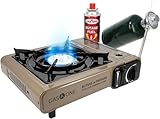
- Duel Fuel - Compatible With Both Butane (Fuel Not Included) And Propane Fuel (Fuel Not...
- Automatic Piezo Electric Ignition - Piezo-Electric Ignition That Eliminates The Use For...
- Easy To Use - Our Gs-3400P Is Easy To Use With Adjustable Heat Dial And Automatic...

I like the concept of a dual-fuel stove because this model can operate using either butane cartridges or small propane cylinders. That gives you more flexibility when one fuel is difficult to find. This should go without saying, but it’s also easy to overlook – store fuel as well.
6. USB Power Bank
Your phone isn’t just a phone. It’s a flashlight, map, news source, camera, weather radio substitute, communication device, banking portal, and more. Keeping it charged is a preparedness priority. Buy a decent power bank if you don’t already own one. You’ll use it well before any power outage, so it’s a prep that doesn’t sit around waiting for the collapse.

- 【20000mAh Large Capacity】Equipped with a high-capacity 20000mAh lithium-polymer battery...
- 【Charge 5 Devices Simultaneously】Supports charging up to 5 devices at once. Comes with...
- 【4-Panel Solar Charging】Features 4 integrated high-efficiency solar panels, capturing...
The low-cost power bank above has built-in solar panels, charging cables, and a flashlight. This is particularly useful because it can recharge with the sun, you won’t have to worry about losing or forgetting charging cables, and you’ll use the flashlight more often than you think. Keep it charged!
7. An Emergency Radio
Your smartphone is tremendously useful… until cellular networks go down or the battery dies. You need other ways to receive information. That’s where a good emergency radio comes in. AM/FM radio can keep working even when cellular networks don’t. But there are other advantages to these radios. They often incorporate emergency flashlights, can be charged with a hand crank, and act as a power bank so you can charge devices off it.

The Midland ER310 receives AM/FM and NOAA weather information and offers several methods of supplying power, including its internal rechargeable battery, a hand crank, and solar charging. I’d still keep spare battery-powered radios around if you already own them. Redundancy matters more than most people think. Remember: two is one and one is none.
8. Sanitation Supplies
This category gets ignored because it’s so boring. Nobody looks cool posing on Instagram with contractor bags. Buy them anyway. I’d stock:
- Heavy-duty trash bags
- Toilet paper
- Soap
- Calcium hypochlorite (disinfectant with a long shelf life)
- Disposable gloves
- Five-gallon bucket
- Basic hygiene supplies
If municipal water or sewer service fails, sanitation can become a problem surprisingly quickly.
9. Improve Your First-Aid Supplies
If you don’t already have a basic household first-aid kit, start building one. I generally advise building your own kits whenever possible because you can personalize it and make sure you’re getting the components you actually need while controlling the quality of the products. You can also add products as finances allow. That said, I do advise buying a designated medical bag to put it all in. They’re purpose-built bags and they’re easily recognizable. If someone had to grab medical supplies quickly, it’s much faster if the bag is easily identifiable.
I like the Primacare First Responder Trauma Bag for building your own kit. It’s big enough to hold the basics and it’s easily identifiable.

- Multiple compartments: Stay organized with an emergency medical assistant bag with three padded...
- Superior design: The Red medical trauma strap bag is designed with a medical logo with two...
- Higher visibility: This personal medical item compartment bag contains two high visibility...
If you want to start with a solid first aid kit that includes a bag you can add components to, I like the Scherber First Responder Trauma Kit. It’s pricey, but medical supplies often are.

- THE ULTIMATE FIRST RESPONSE SET | Be Fully Stocked & Ready to Go in Case of Emergency...
- DURABLE POLYESTER GEAR BAG | Designed for Many Years of Wear, Tear, Use & Abuse | Constructed...
- 8 SEPARATE POCKETS & COMPARTMENTS | Organizational System is Designed to Safely Store All Kinds...
10. Portable Power Station
For someone starting from scratch, a small portable power station provides a useful middle ground between USB battery banks and a gasoline generator. That said, it’s much closer to a USB battery bank than a gas generator. Don’t expect generator-style capacity from a typical handheld power station. Power stations do have advantages over a gas generator, though. They don’t create emissions (carbon monoxide can be deadly and you can’t use gasoline generators in a house), they’re silent, and most can be recharged with optional folding solar panels.
Staying mindful of the $1,000 amount, I’d steer away from more powerful power stations. If your budget allows for them, great! If you’re working on a budget, scale it back to something like the Anker SOLIX C300. It has a built-in light and it’s great for camping. I’ve used one many times while camping and we set it on the picnic table. Kids charge their devices on it and we use the light at night for playing board games.

- ...
- 𝗠𝗮𝘀𝘀𝗶𝘃𝗲 𝗣𝗼𝘄𝗲𝗿 𝗼𝗻 𝘁𝗵𝗲 𝗚𝗼: Take portable...
- ...
The C300 has a 288Wh battery and 300W continuous output, with higher short-duration surge capability. That isn’t enough to run your entire house. That’s okay. At this stage, I’m interested in powering smaller essential devices:
- Phones
- Tablets
- Radios
- Rechargeable lights
- Some laptops
- Small electronics
- Certain medical or communications equipment within the unit’s limits
The important thing is understanding watts and watt-hours before buying a power station. A device that consumes 1,500 watts cannot be run by a power station capable of delivering only 300 watts simply because both products have the word “power” in the description.
Where I Would NOT Spend My First $1,000
This may be just as important as what I would buy. If you’re starting from zero, I would generally not spend a large portion of that first $1,000 on:
- A giant bug-out pack
- Premium survival knives
- Cases of freeze-dried food
- Elaborate tactical equipment
- Gas masks without a specific threat assessment
- Novelty survival gadgets
- Large solar installations before solving basic problems
- Anything you haven’t taken the time to learn how to use
I’m not saying those things don’t have a place. I’m saying they probably aren’t where you should start. Preparedness should solve vulnerabilities. Buying survival gear because it looks like survival gear isn’t the same thing.
The Rule I Wish More People Followed: Buy It and Use It
Buying equipment is not the end of preparedness. It’s the beginning.
- If you buy a stove, cook dinner on it.
- If you buy a water filter, use it.
- If you buy a radio, figure out which stations you can actually receive.
- If you buy a power station, determine what it can and cannot operate.
- If you buy a generator, start it periodically.
- If you buy a jump starter, learn where your vehicle’s battery terminals are.
- If you store food, eat and rotate it.
What did I leave off the list or what preps do you think are more important for beginners? Let me know down in the comments.
14 comments
Thank you for all this info. I’m in Australia. I was born in 1957. I want to have at least a bit of wisdom and be able to help if the shelves are suddenly empty. I would appreciate your emails please.
Thanks. You can sign up right on this website – “Join the tribe”
great stuff.
very awesome good information great advice
your email list
thank you
I’ll add you – thanks.
I’m a mom of 7, and I have been watching you for a while now and a few other people also I’ve actually learned a lot from you and I’ve been teaching my kids I am really thankful for the information and I appreciate what you’re doing because you’re really saving me. I have never been camping a day in my life so I would not even know what to do but the more I do it I actually like it, which is amazing cause I do wanna farm someday
Thank you. Camping can be low-cost fun and it’s a great family activity.
Thank you for adding me to your list
👍🏼
I’m assuming you already have a means to protect your preps, otherwise something like a hunting rifle should be one of your first purchases. Otherwise this is a great starter list to which I’d add things like unscented, undyed bleach, matches and other firestarters, and walkie talkie radios.
One would hope, but if someone is just starting out, buying a hunting rifle would eat up most of the $1,000. Add some ammo and accessories and you’re easily over $1k.
At least a pump-action shotgun, can’t fight a war with it, but you can defend yourself and it fires flares, tear gas and anything that fits in the barrel.
I’m interested in getting as much information as possible to be fully prepared…thank you