
Water is the one resource you cannot afford to get wrong. You can go weeks without food, but without clean drinking water, your ability to think clearly, stay mobile, and protect yourself deteriorates fast. Water is also one of the first systems to fail when things go sideways. During emergencies—whether it’s a power outage, supply chain disruption, natural disaster, or long-term grid failure—municipal water systems are often the first critical service to go offline. Pumps lose power, treatment plants shut down, and “safe” tap water can quickly become unreliable or unavailable altogether.
That’s why I approach preparedness in layers: stored water for immediate needs, purification tools to make questionable sources drinkable, and collection methods to replenish supplies over time. No single product does it all. A well-rounded water plan gives you options—containers sized for your living space, redundant purification methods, and ways to capture rain or surface water when stored supplies run low.
Storage
Water storage is the foundation of any serious preparedness plan. I always stress the importance of having a baseline supply already on hand, because in most emergencies, stored water is what carries you through the first critical days. As I explain in How Much Water Should You Store?, many people dramatically underestimate both their water needs and how quickly shortages can become life-altering. Drinking is only part of the equation. Cooking, hygiene, sanitation, pets, and medical needs all add up faster than most expect.
Storage also forces you to confront two realities I see people overlook all the time: weight and space. Water weighs over 8 pounds per gallon, and even a modest amount can strain floors and shelving if it isn’t planned properly. Space is just as limiting—especially for apartment dwellers or those without basements. That’s why I’ve organized this section by size and capacity, from small, portable containers to large-volume tanks.
Equally important is using purpose-built water storage containers. Food-safe plastics, proper seals, and designs meant for long-term storage significantly reduce the risk of contamination, leaks, and chemical leaching. The right container doesn’t just hold water; it protects it.
Small Containers – 3.5-5 gallons
Blue 5-gallon camping jugs are a common choice among preppers, but in my experience they come with real limitations. They don’t stack well, which reduces storage efficiency, and once full, each jug weighs about 41.5 pounds. That amount of weight can make water difficult—or even unsafe—to handle for kids, seniors, or anyone with physical limitations during an emergency.
That’s why I prefer modular containers like the AquaBrick and WaterBrick. Their smaller capacities (3 and 3.5 gallons) make them easier to lift, move, and rotate, they include integrated spigots, and they’re designed to stack securely.

- Ideal long term water storage container with a 3 gallon capacity.
- Also serves as a long term food storage container holding 20 lbs of dry goods.
- The innovative design of the AquaBrick Containers make them the best way to store water for an emergency as they are 100% Leak Proof, easy to fill and pour, and the stackable water storage containers...
- Easy to pour and empty out completely.
Between the two, the AquaBrick is my preferred option. Its construction feels more solid, and it supports optional accessories such as a water filtration system and a food storage funnel, allowing it to double as a container for dry goods like beans and grains, which adds flexibility to a small-space storage plan.
Mid-size Containers – 20-35 gallons
Wurx 20-gallon Container

- PREPARE for natural disasters or ANY emergency with these convenient, portable, stackable, space-saving water containers.
- SAFE DRINKING WATER is easily accessible and conducive to small-space living (apartments, dorm rooms, etc.) Water is recycled preventing stagnant or stale water.
- MULTIFUNCTIONAL and perfect for any outdoor adventures. With the ease of compactness and portability, you can take these tanks camping, on family picnics, tailgating, road trips, etc.
- BPA free
WaterPrepared 35-gallon Tank
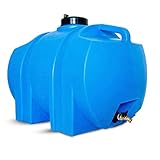
- Whether you're camping, hiking, or embarking on a road trip, rely on this 35-gallon Water tank to meet your liquid storage needs with ease
- Specially blended UV-proof plastic safeguards water, preventing build-up, and ensuring its safety for extended periods
- Designed with a spigot that connects to a standard garden hose, eliminating the need for a siphon or pump for water retrieval
- Weighing only 16 pounds empty, the 35 Gallon Horizontal tank boasts a compact footprint suitable for ATV or camping trailer attachment, facilitating convenient water storage during outdoor adventures
Exodus 35-gallon Tank

- Space Saving Design: Our water storage tanks are designed to be compact and efficient. Our tanks fit through standard doorways and the light weight makes it easy to move.
- Full Package: Each of our tanks comes with an Anti-Airlock lid that allows air in as water goes out, 1 installed turn valve, a packet with a rotation schedule, instructions and your warranty...
- High Quality Build: Our tanks are made in the USA, and are BPA-free, UV-resistant, NSF, ANSI, and FDA compliant, and can be recycled. We make our tanks with a customized HDPE that has a higher impact...
- Safe and Clean Water Storage: Each of our tanks goes through a 5-point quality inspection to ensure structural integrity, cleanliness, and hardware quality. Going through this process with each of our...
Large Containers – 55 gallons and up
WaterPrepared 55-gallon (stackable) tanks

- Large 55-Gallon Capacity: Store a reliable emergency water supply for your home, cabin, or survival kit with this high-volume tank for long-term hydration and utility use
- Stackable Space-Saving Design: Unique built-in grooves and flat surfaces lets you stack multiple tanks securely to maximize storage in garages, sheds, closets or basements
- Durable BPA-Free Plastic: Constructed from food-grade, UV-proof HDPE to help maintain fresh and clean water and shield contents from heat, weather, and outdoor exposure
- Convenient Dispensing System: Integrated spigots and utility valves offer easy access and hose compatibility for hydration, cooking, washing, showering or outdoor cleaning needs
Filtration and Purification
Storing water has its limits, both in space and weight. Further, it’s entirely possible that a crisis may necessitate the need to leave your stored water behind. That’s why having water filtration and purification methods are critical to any long-term plan. Streams, rainwater, ponds, melted snow, and even compromised tap water can become viable sources—but only if you know how to properly treat them.
Filtration vs Purification
Know that water “filtration” and “purification” are often used interchangeably, but they are not the same. The typical off-the-shelf backcountry water filter sold to preppers and campers will remove sediment and bacteria but will not remove viruses. This generally isn’t a problem as it’s rare to find viruses in backcountry lakes and streams where bacteria is generally the problem; however, such filters should not be used to floodwaters, as an example. Floodwaters often contain sewage and wide array of harmful viruses, bacteria, and parasites. This is why governments issue boil water advisories in such cases. Boiling water will kill the harmful bacteria, viruses, and parasites, but it will not remove chemicals or heavy metals.
Creating more confusion is that there are different methods of purification.
So, if the floodwaters you’re boiling also contain chemical waste, boiling w
Why not just get a water purifier and cover all bases?
Redundancy matters here. A layered system ensures you’re not relying on a single point of failure when clean water becomes difficult—or dangerous—to find.
Emergency Water Straws

- Humans can live 3 days without water but 1 gallon (the recommended daily water intake) weighs over 8lbs. When you are on the move, chances are you'll be able to find water somewhere, just not the kind...
- Our filters weigh only 2oz and measure 8 inches long, so you can take it with you anywhere. Be prepared when camping, hiking, enjoying the outdoors, or when facing stressful situations such as natural...
- Each of the 5 filters in this pack removes >99.99% of waterborne bacteria (such as E. coli and legionella), and >99.99% of waterborne parasites (such as giardia and cryptosporidium). Removes the...
- The lifespan of each filter can reach up to 1800 gallons, depending on how much sediment you're trying to filter and how well you maintain it in between use. Just one filter can provide up to 10 years...
Chemical Treatments
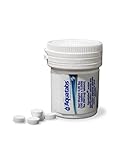
- TRUSTED WATER PURIFICATION TABLETS - Aquatabs are the world's leading water purification tablets for drinking; the ultimate choice for portable water treatment & emergency drinking water; Removes...
- FEEL SAFE OUT THERE - Experience rapid water purification with our 397mg tabs; purifies 4 gal in 30 mins; an essential emergency water filter & water purifier for camping; the top choice for water...
- BE BETTER PREPARED - These lightweight water filter survival tablets are a must for your bugout bag; a key part of portable water filters survival kits; perfect for emergency preparedness & RV water...
- ENJOY GREAT TASTING WATER - Our water cleaning tablets have no bad taste, color, or odor, unlike iodine tablets. Get clean hydration without the awful iodine taste; pair with a water filter bag or...
Hiking-style Portable Filter
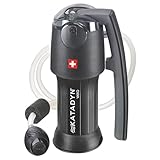
- Dual pumping modes
- Removes particles
- Activated Carbon reduces chemicals
- Suitable for backpacking
UV Water Purifier

- Powerful UV-C Purification: Eliminates 99.99% of harmful microorganisms, ensuring safe drinking water free from bacteria, viruses, and protozoa.
- Portable Charging: Recharge the 2200 mAh battery via any USB power source—solar panel, laptop, or car—ideal for hiking, camping and emergencies. Batteries and neoprene carrying case included.
- Fast Water Treatment: Purify 16 fl. oz. (0.5L) in under 1 minute and 32 fl. oz. (1L) in 90 seconds—just press a button and agitate for quick results.
- User-Friendly Design: Fits standard water bottles and cups. Watertight seals protect electronics; rubber grips ensure secure handling in wet conditions.
Collection
Water collection is about sustainability. Once stored water is depleted and purification tools are in place, you still need a way to bring new water into your system. Rainfall, roof runoff, snow, and surface water can all be captured—sometimes legally, sometimes with restrictions—depending on where you live. Planning ahead means understanding both the opportunities and limitations in your environment.
This section covers collection products designed to safely capture water without introducing unnecessary contaminants. Purpose-built systems outperform improvised setups by controlling debris, reducing stagnation, and making downstream purification easier. Collection doesn’t replace storage—it feeds it. When storage, purification, and collection work together, you move from short-term emergency readiness to long-term water resilience.
FAQs About Emergency Water Storage & Preparedness
How much water should I store for emergencies?
The CDC recommends storing least one gallon of water per person per day for drinking and minimal hygiene. I recommend 1.5 gallons per day. In reality, most households need more once you account for cooking, sanitation, pets, and medical needs. A realistic plan looks at how long you want to be self-sufficient and how your household actually uses water, not just generic guidelines.
Why does water weight matter for home water storage?
Water weighs about 8.3 pounds per gallon. That adds up quickly. A 55-gallon container can weigh over 450 pounds when full, which affects where it can be stored safely, how it’s moved, and whether your floors or shelving can support the load.
What are the best containers for long-term water storage?
Purpose-built, food-safe water storage containers are the best choice for long-term storage. They are designed to safely hold drinking water, seal properly, resist leaks, and reduce the risk of contamination or chemical leaching over time.
Can I store water in old milk jugs or random plastic bottles?
This is not recommended for long-term storage. Milk jugs break down, are difficult to sanitize, and often leak. Further, they are not designed to block light and they are not stackable. Random containers may not be food-safe and can introduce contamination, off-tastes, or bacteria into stored water.
How do I choose between small and large water storage containers?
The right choice depends on available space, weight limits, and how you plan to use the water. Small containers are portable and easy to rotate. Mid-size containers balance capacity and convenience. Large barrels or tanks provide high volume but require careful planning for placement, dispensing, and structural support.
Do I still need water purification if I store a lot of water?
Yes. Stored water can run out, be lost to leaks, or become inaccessible. Purification tools allow you to safely use rainwater, surface water, melted snow, or questionable tap water. A resilient plan includes both stored water and multiple purification methods.
What is the best water purification method for emergencies?
There is no single best method for every situation. Filters work well for many contaminants, chemical treatments are lightweight and reliable, UV systems require power and clear water, and boiling is effective when fuel is available. Many people use more than one method for redundancy.
How can I collect water during an emergency?
Water can be collected from rain, surface sources like streams or ponds, or by melting snow and ice. Collection is only the first step—collected water should always be filtered and/or disinfected before drinking.
What order should I prioritize: storage, purification, or collection?
Start with water storage for immediate needs, add purification for when stored supplies run low, and build collection methods to replenish your system. The most reliable water plans use all three layers together.